Voice and chat 4 min read
AI Voice Agent vs. Answering Service vs. Voicemail
How an AI voice agent compares with an answering service and voicemail for missed calls, and how to choose the right one for your business.
Text size
Font
When a customer calls and nobody picks up, you have three common options: voicemail, an answering service or an AI voice agent. They solve different problems. This guide compares them side by side so you can choose based on what your callers need.
The short answer
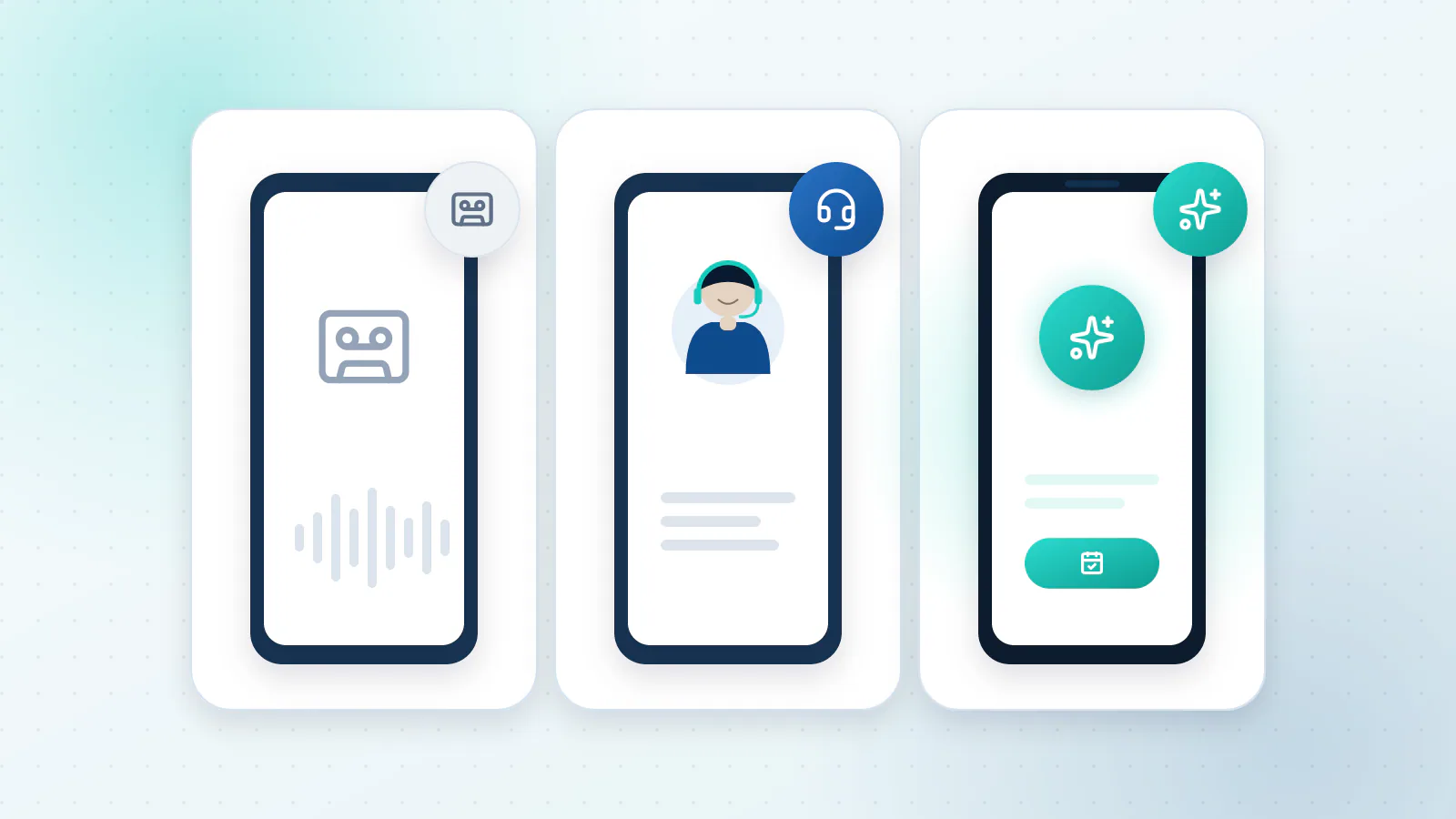
- Voicemail records a message and nothing else. It is fine when calls are rare and not urgent.
- An answering service puts a human voice on the call and takes a message or follows a script. It suits businesses that want a person on every call.
- An AI voice agent answers instantly, answers questions about your business, qualifies the caller and books the appointment. It suits businesses that want every call turned into a next step.
Side-by-side comparison
| Voicemail | Answering service | AI voice agent | |
|---|---|---|---|
| Answers the call | No, records a message | Yes, by a person | Yes, by AI |
| Covers nights and weekends | Yes, message only | Depends on the plan | Yes |
| Answers questions about your business | No | Within a script | Yes, from information you provide |
| Books into your calendar | No | Sometimes | Yes, when connected to your calendar |
| Handles several calls at once | Not applicable | Limited by staffing | Yes |
| Updates your CRM | No | Rarely | Yes, when connected |
| Best for | Low call volume, non-urgent calls | A human voice on every call | Every call answered, qualified and booked |
Why missed calls cost more than they seem
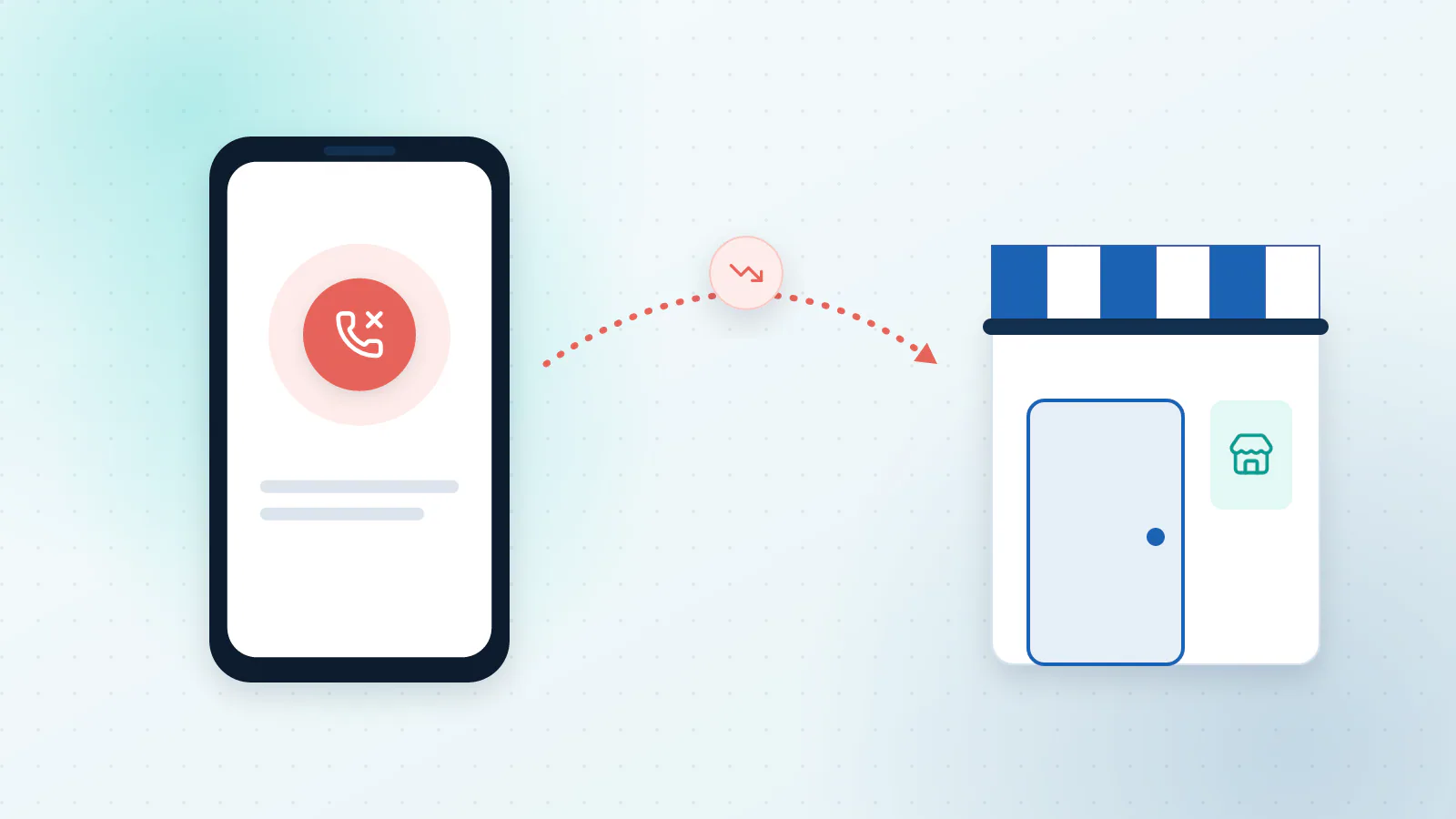
A caller who reaches voicemail often hangs up and calls the next business on the list. When the call is about a booking, a quote or an emergency, the business that answers first often gets the work. That is the real cost of a missed call: not the minute on the phone, but the job that goes elsewhere.
The best evidence we know of is about web inquiries rather than phone calls. In a Harvard Business Review study of 1.25 million sales leads at 42 companies, firms that tried to contact a lead within an hour were nearly seven times as likely to qualify it as firms that tried even an hour later, and more than 60 times as likely as firms that waited a day or longer. Qualifying meant having a meaningful conversation with a key decision maker (HBR, 2011). A caller who reaches voicemail is waiting in much the same way, but the study did not measure calls, so read it as a pattern, not a forecast for your phone.
Where an AI voice agent fits best
- Appointment-based businesses such as clinics, salons, home services and professional firms
- Businesses that get calls after hours or while staff are busy with customers
- Teams that want every call logged and followed up in the CRM
Where a person is still the better choice
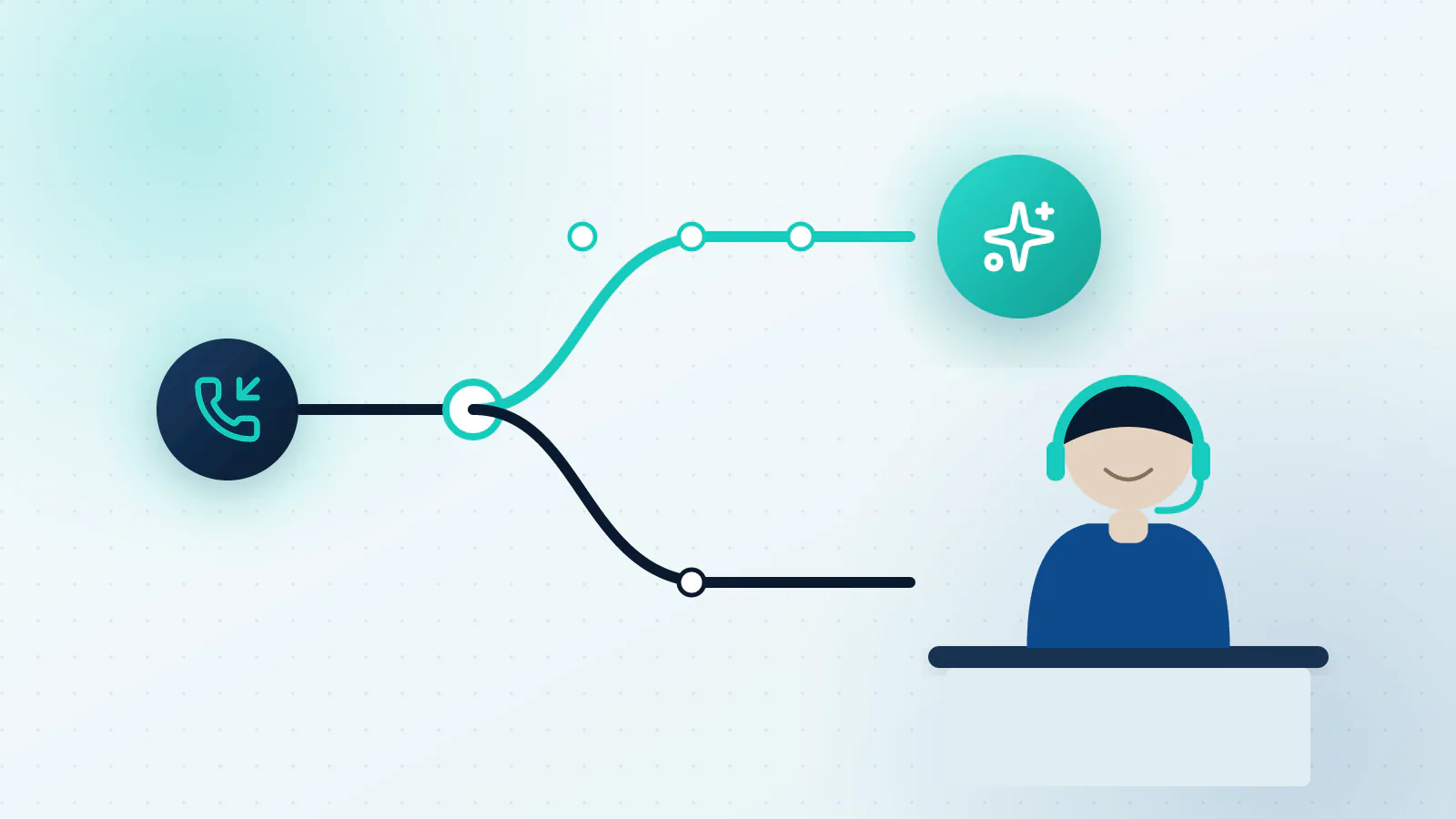
Calls that are emotional, complex or high stakes should reach a person quickly. A good AI voice agent is built around that. It handles routine calls fully and transfers the rest with a summary, so the person who picks up has the context.
Keep the route to a person short. In a Gartner survey of 5,728 customers, 64% said they would prefer companies didn’t use AI for customer service, and the top concern was that it would get harder to reach a person (Gartner, July 2024). That survey covered customer service in general, not only calls, but a voice agent that transfers quickly to a person answers the worry directly.
Questions to ask before you choose
- What do callers usually want: a quick answer, a booking or a conversation?
- How many calls arrive when nobody can answer?
- What should happen after the call: a booking, a text, a CRM entry?
- Which calls must always reach a person?
Two more points belong on that list. First, callers should know they are talking to an AI. In the EU, Article 50 of the AI Act says AI systems that interact directly with people must be designed so that people are told they are dealing with an AI, unless that is obvious (European Commission). Second, check how recording and texting work. In the US, the FCC says it has no rules on individuals recording phone conversations, but some state laws prohibit the practice (FCC). A caller also needs consent before sending autodialed or prerecorded texts to a wireless number: written consent for commercial texts, and consent that may be oral for informational ones (FCC). Ask your own advisor what applies to you.
If you decide on a voice agent, our guide to the AI receptionist for small business covers the call flow, the qualifying questions and how to test it. For the wider picture, see which business processes AI can automate.
If most calls follow a pattern, an AI voice agent is likely to fit. If most calls are unique conversations, start with a person and add AI for the routine calls. Not sure? Book a call and tell us about yours and we will give you an honest view.

Questions about your own business?
Ask Sam how this applies to you, or book a free 20-minute audit and talk it through with the team.
Frequently asked questions
What is the difference between an AI voice agent and an answering service?
An answering service puts a person on the call, who takes a message or follows a script. An AI voice agent answers instantly, can answer questions about your business, qualifies the caller and books the appointment while they are on the line, then logs everything in your CRM.
When is voicemail enough?
Voicemail is enough when calls are rare, not urgent and not tied to bookings or quotes. If a missed call can mean a lost job, a faster response is worth considering.
Can an AI voice agent transfer a call to a person?
Yes. A well-built voice agent handles routine calls fully and transfers emotional, complex or urgent calls to a person, along with a short summary of the conversation.
Sources
- The Short Life of Online Sales Leads Harvard Business Review
- Gartner Survey Finds 64% of Customers Would Prefer That Companies Didn't Use AI For Customer Service Gartner
- Article 50: Transparency obligations for providers and deployers of certain AI systems European Commission, AI Act Service Desk
- Recording Telephone Conversations Federal Communications Commission
- Stop Unwanted Robocalls and Texts Federal Communications Commission