AI basics 4 min read
AI Agent vs. Chatbot vs. Automation: Which Do You Need?
Chatbots answer, automation follows rules and AI agents do whole jobs. Here is how to tell which one fits your problem, with simple examples.
Text size
Font
Pick a chatbot if your problem is repeated questions, automation if it is repeated steps, and an AI agent if it is a whole job with several steps and some judgment in the middle. Many businesses end up with a mix, and the best starting point is whichever problem costs you the most time.
Start with the problem, not the technology
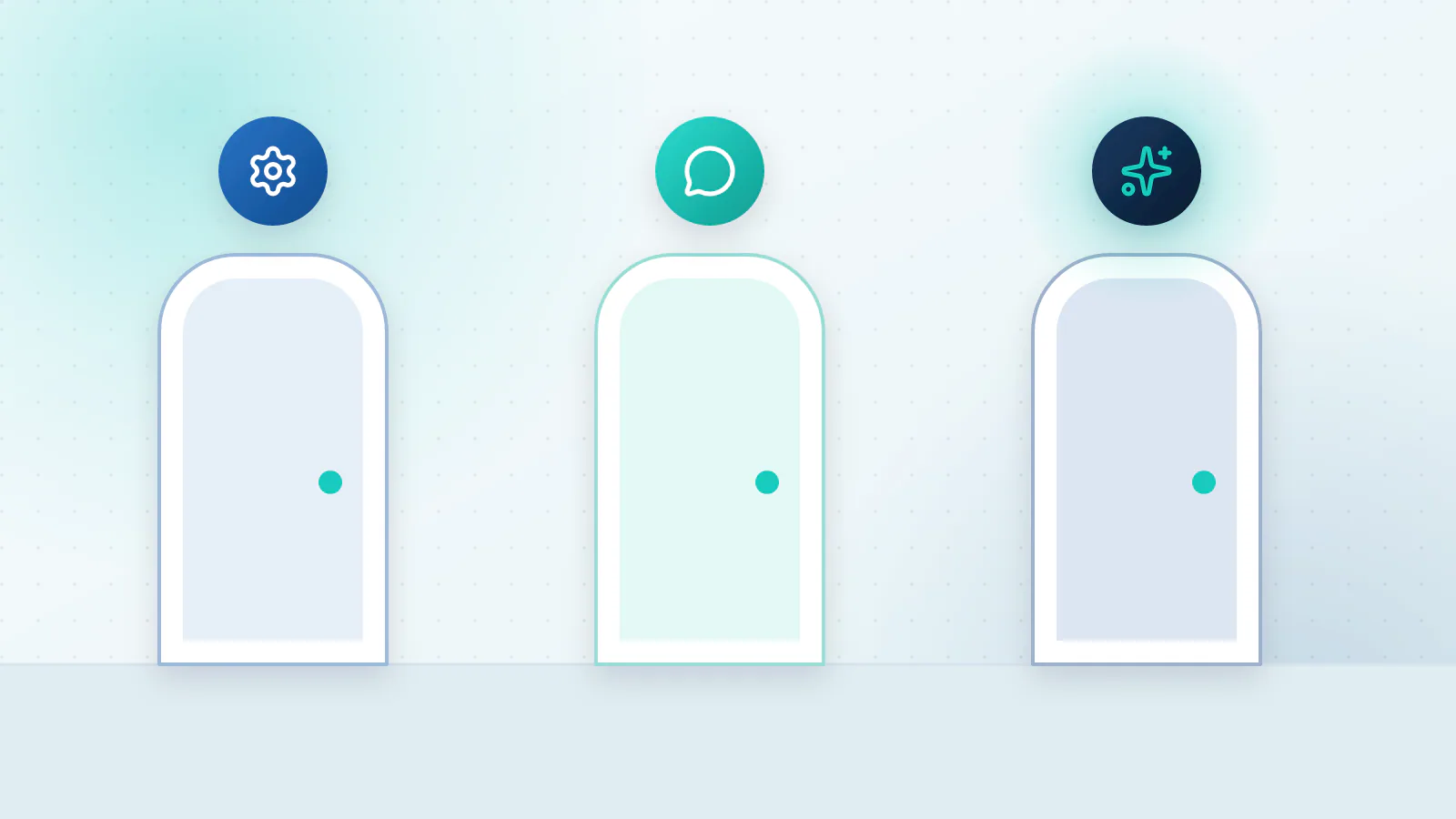
Which sentence sounds most like your week?
- “We answer the same questions all day.” That points to a chatbot (or an AI assistant that answers from your own information).
- “We copy the same details from one tool to another.” That points to automation.
- “Every new lead has to be read, checked, answered and booked.” That points to an AI agent.
The three, side by side
| Chatbot | Automation | AI agent | |
|---|---|---|---|
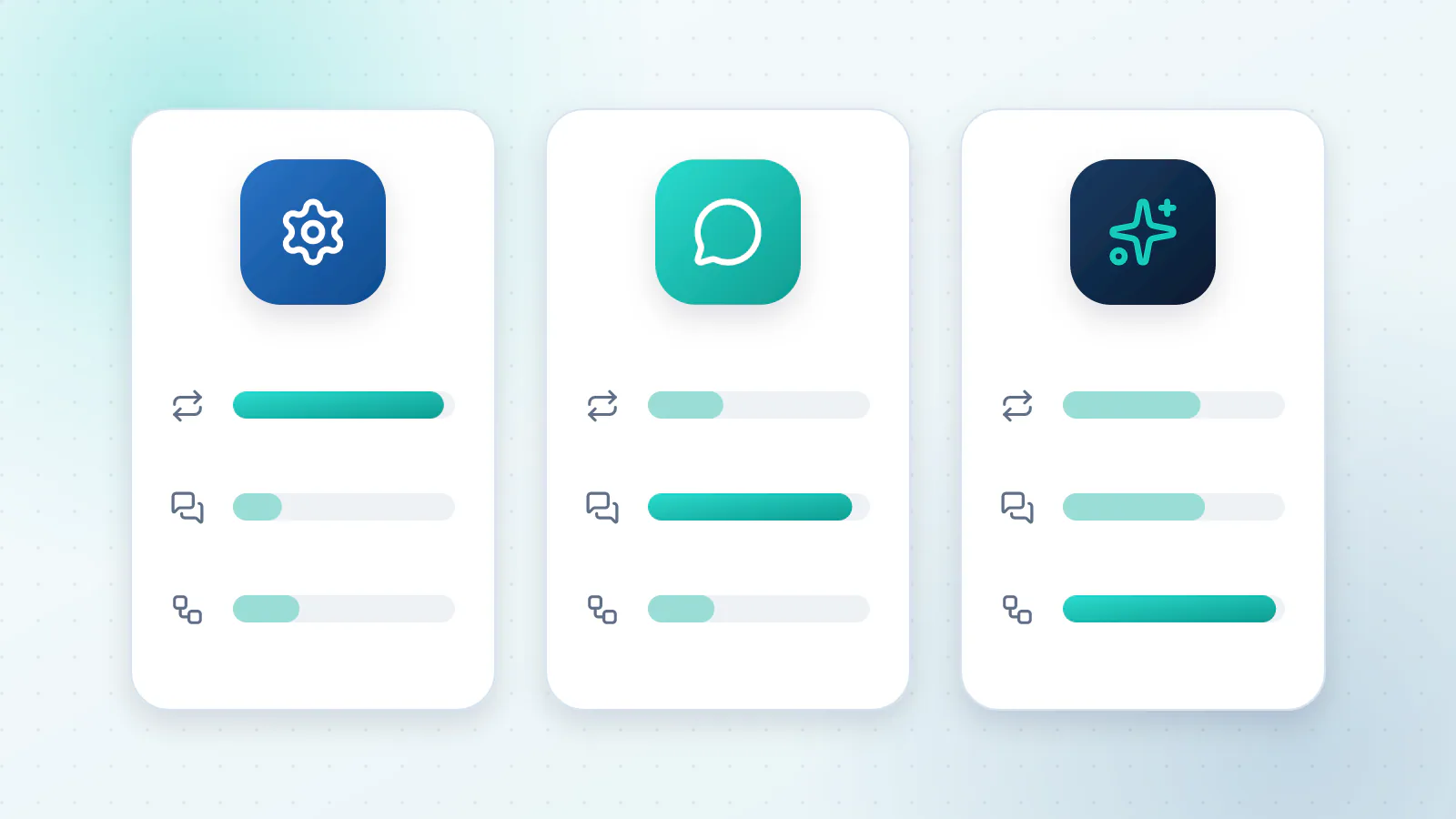
| Good at | Answering common questions | Repeating predictable steps | Completing a job with several steps |
| Example | “What are your opening hours?” | New order arrives, record is created | New lead arrives, gets a reply, is qualified, booked and logged |
| Handles messy input | Somewhat | Poorly, unless AI is added | Yes |
| Takes action in your tools | Rarely | Yes, the same way every time | Yes, and decides which action fits |
| Struggles with | Anything off script | Anything the rules did not expect | Jobs with no clear definition of “done right” |
| Needs from you | Your answers and your tone | The exact steps | The goal, the limits and the tools it may use |
The big technology companies draw a similar line. Google Cloud’s guide ranks bots, AI assistants and AI agents by autonomy: bots are the least autonomous and typically follow pre-programmed rules, assistants are less autonomous than agents and need user input and direction, and agents have the highest degree of autonomy, able to make decisions on their own to reach a goal (Google Cloud). Anthropic’s engineering guide separates workflows, where AI models and tools follow paths set in code ahead of time, from agents, where the AI directs its own process and its use of tools (Anthropic).
A few examples
These are illustrations, not case studies.
- A dental office. Patients ask about hours and insurance all day: a chatbot. New-patient forms need to land in the practice system: automation. Callers who want an appointment: a voice agent that checks the calendar and books the slot.
- A home-services company. After-hours calls: a voice agent. Chasing unpaid invoices: automation with an AI step that writes each reminder. Reading incoming job requests and deciding who should take them: an agent.
- An online shop. Product questions: a chatbot. “Where is my order?” needs a look in the order system and a reply: an agent.
How do they work together?
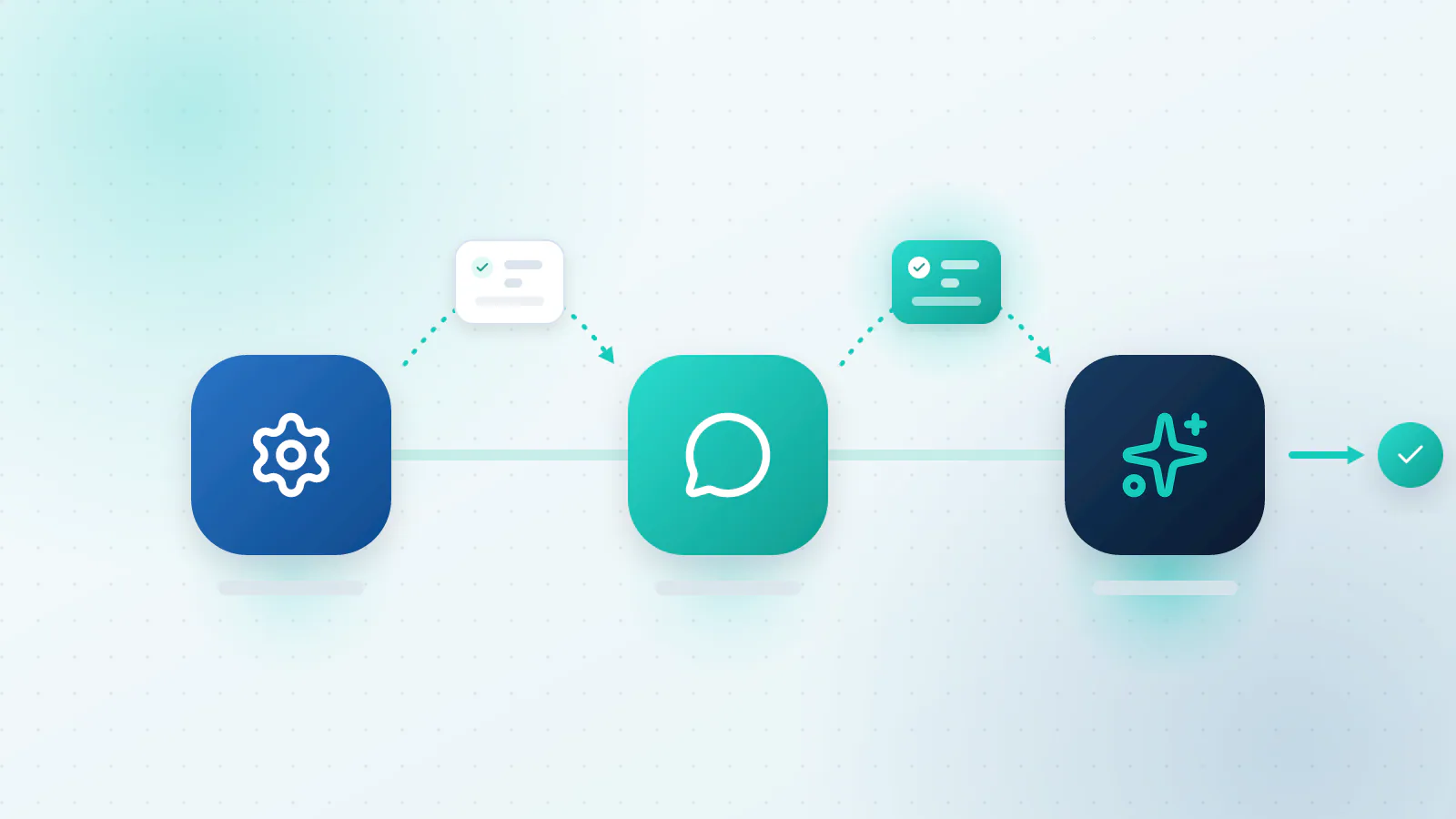
They are not rivals. A common setup is a chat window in the front, an agent in the middle that does the work, and automation underneath moving details between your tools. You can build up to it one piece at a time.
A simple way to decide
- Write down the task in one sentence.
- Count the steps. One or two predictable steps: automation. Several steps with decisions in between: an agent.
- Look at the input. A form with fixed fields is easy for plain automation. Emails, voice and free text need AI.
- Look at the risk. If a mistake is costly, keep a person approving the final step.
- Start with the smallest option that solves the problem.
Anthropic gives developers the same advice: find the simplest solution possible, and add complexity only when you need it (Anthropic). A Gartner analyst suggests using AI agents where decisions are needed, automation for routine workflows and assistants for simple retrieval. Gartner also warns about “agent washing”, the rebranding of existing products such as AI assistants, robotic process automation and chatbots as agents without substantial agentic capabilities, and it expects over 40% of agentic AI projects to be canceled by the end of 2027 because of escalating costs, unclear business value or inadequate risk controls (Gartner, June 2025). When a vendor says “agent”, ask what it decides on its own and what is a fixed rule.
If you want to go deeper, read what an AI agent is, or see how we approach AI automation and AI chat and support. For the seven everyday problems where this choice comes up, see AI automation for small business, and for the wider list of work AI can take on, see which business processes AI can automate. Not sure which fits? Book a call and tell us about your week.

Questions about your own business?
Ask Sam how this applies to you, or book a free 20-minute audit and talk it through with the team.
Frequently asked questions
Can I start with a chatbot and upgrade to an agent later?
Yes. The answers and information you give a chatbot are reusable. When you are ready, an agent can use the same material and also take action in your tools.
Is an AI agent more expensive than a chatbot?
Usually it takes more to build, because it connects to more tools and handles more cases. Compare the cost with the work it removes, not with the price of the simplest option.
Do I need all three?
No. Many businesses need only one, and the right starting point is whichever sentence in this article sounds most like your week.
What if my work is a mix?
That is common. Start with the part that costs you the most time and add the others when the first one has paid off.